The Gordons’ Departure from Birtwick
Black BeautyThe Gordons’ Departure from Birtwick is the painful end of Black Beauty’s life in a kind and settled household. Set in motion by the mistress’s illness, the departure breaks up the family’s establishment and changes the future of the horses and stable staff as well as that of the household itself. Its final journey—from the hall through the village to the railway station—turns a private farewell into a shared loss, while beginning the transition to the next stage of Black Beauty’s story.
Causes and the Household’s Change
After three years at Birtwick Park, Black Beauty senses that a period of happiness is about to give way to a sad change. The mistress is ill; the doctor comes frequently, and the master appears grave and anxious. The household learns that she must leave home at once for a warmer country, where she is expected to remain for two or three years. The news affects everyone, and the master begins making arrangements to break up the establishment and leave England. In the stable, the coming departure becomes the subject of constant conversation.
The sadness is visible in the ordinary habits of the household. John Manly works in silence, and Joe Green scarcely whistles. There is much coming and going, while Black Beauty and Ginger are kept fully occupied. The departure therefore unfolds before the last day: the daily rhythm of the stable has already been unsettled by preparations and the knowledge that the familiar household will disperse.
The sense of loss is sharpened by the life the horses are leaving. Black Beauty describes the master and mistress as respected and beloved for their kindness to people and animals, and recalls a household in which servants shared that humane example. The dispersal is not simply a change of address. It ends a place where the horses had experienced care and where cruelty toward animals was actively challenged.
Arrangements for the Horses and Staff
The first of the family party to leave are the two young daughters, accompanied by their governess. They come to say goodbye and embrace Merrylegs, who is treated as an old friend. Their departure precedes the final journey and makes the farewells to the animals part of the household’s breaking-up, not an afterthought.
The master sells Black Beauty and Ginger to his old friend, the Earl of W——, believing that they will have a good place there. Merrylegs receives a different arrangement: he is given to the vicar, who wants a pony for Mrs. Blomefield, under the condition that he must never be sold. When Merrylegs is past work, he is to be shot and buried. Joe Green is engaged to care for him and help in the house, so Black Beauty concludes that Merrylegs is well provided for. The horses’ futures are thus divided, but the master makes their placement a matter of care and obligation, not merely disposal.
John Manly has been offered several positions but has accepted none. He tells the master that he wants to work with a first-rate colt-breaker and horse-trainer. Young horses, he explains, can be frightened and spoiled by wrong treatment; he hopes to give them a fair start. The master approves of his suitability, promises to write to his London agent, and leaves open the possibility of helping him establish himself. John’s decision gives the parting a forward-looking strand: his work at Birtwick may end, but his intention to protect horses through skilled, considerate training continues beyond it.
The Last Journey
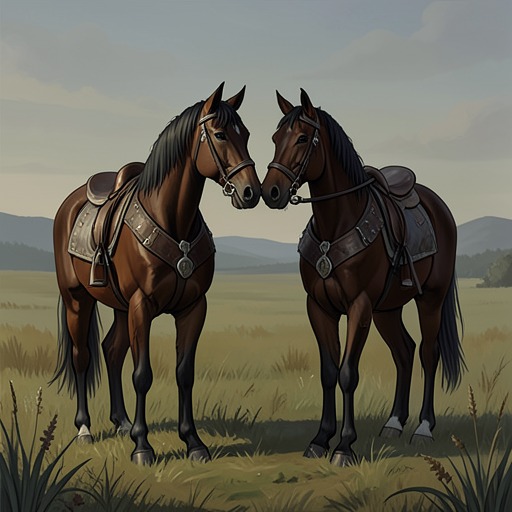
On the final day, the footman and the heavy luggage have already gone. Only the master, the mistress, and her maid remain. Black Beauty and Ginger bring the carriage to the hall door for the last time. Servants arrange cushions, rugs, and other belongings; then the master carries the mistress down the steps and carefully places her in the carriage. The household servants stand around them in tears. The farewell is made concrete through these deliberate acts of departure: the carriage is prepared, the mistress is carried out, and the horses wait to take the family away.
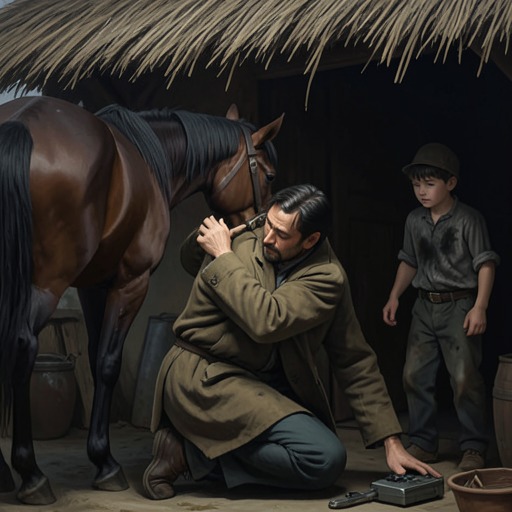
At the master’s direction, John drives. Joe Green rides up, and the party proceeds slowly through the park and village. People stand at their doors to see the family pass and offer blessings. At the railway station, the mistress appears to walk from the carriage to the waiting-room and says goodbye to John. The rein twitches, but John makes no answer; Black Beauty suggests that he may be unable to speak. Joe stays close to the horses’ heads, hiding his tears, while John goes to the platform.
The train arrives, its doors close, and it departs, leaving smoke behind and the people at the station with heavy hearts. The outward journey is over, but the emotional consequence remains with those who return. When John comes back, he says that they will never see the mistress again. He takes the reins and drives home slowly with Joe. For Black Beauty, the words make the change unmistakable: the place they return to is no longer home in the same sense.
Consequences and Narrative Significance
The departure brings Black Beauty’s three-year life at Birtwick to a close and sets the stage for his transfer to the Earl of W——. Ginger is sent with him, while Merrylegs remains under Joe Green’s care and John Manly turns toward work training young horses. The event therefore separates a community without treating every separation as abandonment: the master arranges new homes and work, even as the family’s own future remains uncertain.
The episode’s emotional force comes from its measured sequence of leave-taking rather than a single dramatic confrontation. Early departures, stable preparations, the carefully arranged carriage, the village’s farewell, and the train’s disappearance accumulate into one final break. Black Beauty’s view keeps the consequences grounded in the people and animals left behind: John’s silence, Joe’s concealed tears, and the changed meaning of the journey back. The departure closes the protected Birtwick period and carries the narrative into a less familiar life, with the memory of humane care as its point of contrast.